Showing posts with label living. Show all posts

January 13, 2013

What People Who Live to 100 Have in Common


What People Who Live to 100 Have in Common

A growing number of Americans are living to age 100. Nationwide, the centenarian population has grown 65.8 percent over the past three decades, from 32,194 people who were age 100 or older in 1980 to 53,364 centenarians in 2010, according to new Census Bureau data. In contrast, the total population has increased 36.3 percent over the same time period.

Centenarians in the United States are considerably different from the overall population. Here's a look at some of the characteristics of people who live to age 100:
[In Pictures: States Where People Live the Longest.]

Female gender. It is overwhelmingly women who live to age 100. In 2010, 82.8 percent of centenarians were female. For every 100 females age 100 or older, there are only 20.7 males the same age. Females also make up 61.9 percent of those in their 80s and 72.2 percent of people in their 90s. "We know that women are more social than men. Other studies have found that staying socially connected predicts greater life expectancy," says Gary Small, a professor on aging and director of the UCLA Longevity Center in Los Angeles, who is not affiliated with the Census Bureau report. "If you are social, it may reduce stress levels because you can talk about your feelings and things that stress you out and it seems to help many people. If you need a ride to the doctor or you fall, they can take you to the hospital or help you find the best doctor."

Less diversity. Centenarians are considerably less diverse than the overall U.S. population. In 2010, some 82.5 percent of centenarians were white, versus 72.4 percent of the total population. Black or African Americans were unique in that their proportion of the centenarian population (12.2 percent) is about the same as their percentage of the total population (12.6 percent). Asians made up 2.5 percent of the centenarian population, while they make up 4.8 percent of the total population. And Hispanics represent 5.8 percent of centenarians, but 16.3 percent of the population.

Living with others. Just over a third of both female and male centenarians lived alone in their own home in 2010, but the majority of the oldest citizens live with others. "As people get older, things in life happen--like you might become a widow or you might have a disability, and because of those circumstances, living arrangements often change," says Amy Symens Smith, chief of the age and special populations branch at the Census Bureau. Centenarian females (35.2 percent) were more likely to live in a nursing home than males the same age (18.2 percent). Centenarian males are the most likely to be living with others in a household (43.5 percent), compared to just 28.5 percent of centenarian females.

[Read: How to Finance Life Until 100.]

City living. A large majority of the oldest U.S. citizens live in urban areas. "As age increases, the percentage living in urban areas also increases," says Smith. Some 85.7 percent of centenarians lived in urban areas in 2010, compared with 84.2 percent of those in their 90s, 81.5 percent of those in their 80s, and 76.6 percent of those in their 70s. "Living in the city, you have a lot more mental stimulation and the symphony and better doctors and hospitals and more social networking," says Small. "There are more resources, and there is better transportation."

Located in the Northeast or Midwest. States with the largest populations generally have the most centenarians. California has the largest number of centenarians (5,921), followed by New York (4,605), Florida (4,090), and Texas (2,917). Alaska has the fewest residents age 100 and older (40). Wyoming (72), Vermont (133), and Delaware (146) are also among the states with the fewest centenarians.
The Northeast and Midwest have proportions of centenarians that are higher than the national average of 1.73 per 10,000 people, while the West and South have below-average proportions of centenarians. "There's a lot of stuff going on in local areas, including access to medical care, diet, exercise, the culture, risk-taking, and more smoking," says Linda Waite, a sociology professor and director of the Center on Aging at the University of Chicago. "People in the Northeast tend to be more highly educated, and education is associated with a longer life expectancy." North Dakota is the only state with more than 3 centenarians for every 10,000 people in the state. Other states where centenarians make up a relatively large portion of the population include South Dakota, Iowa, and Nebraska. Three western states have less than one centenarian for every 10,000 people: Alaska, Utah, and Nevada.

[Read: How to Live to 100.]

The proportion of centenarians in the United States is smaller than that of many other developed countries. For example, for every 10,000 people, there are 1.92 centenarians in Sweden, 1.95 in the United Kingdom, and 2.70 in France. And Japan has 3.43 centenarians per 10,000 people, beating even our longest-lived state, North Dakota.

http://money.usnews.com/money/retirement/articles/2013/01/07/what-people-who-live-to-100-have-in-common

April 18, 2012

The Best Place to Retire Overseas on a Budget

By Kathleen Peddicord

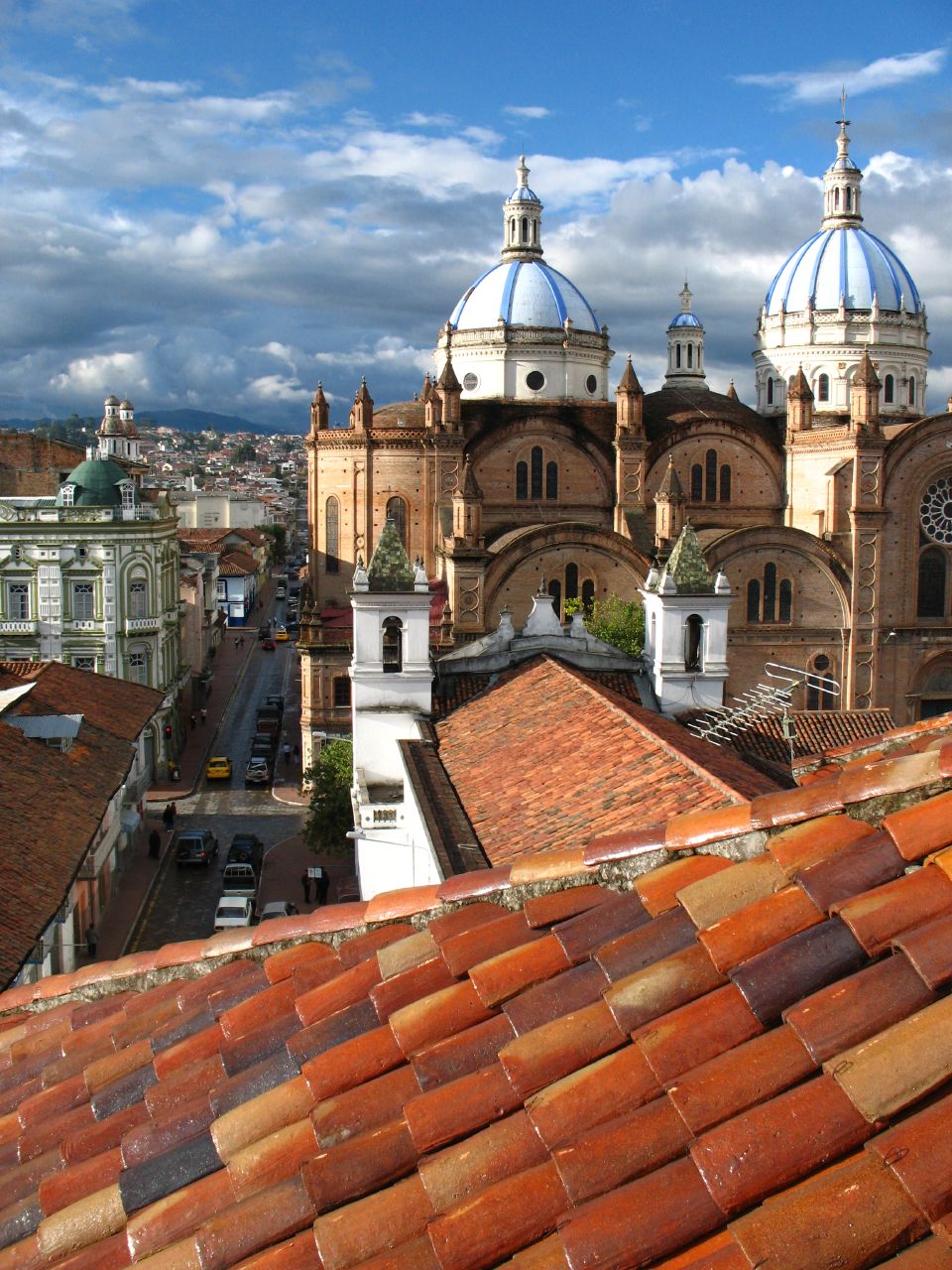
If an affordable cost of living is your priority in choosing where to retire, take a look at Cuenca, Ecuador. This city is one of the world's best places to retire overseas on a budget.
Cuenca is a beautiful colonial city in an interesting and diverse country. The health care is high quality, honest, and inexpensive. The climate is spring-like and pleasant 12 months of the year. And Cuenca's large and growing expat community is one of Latin America's most diverse and well-blended. 
There are other colonial cities in Ecuador, but Cuenca is the cultural heart of the country. In this center of art and literature, you can attend the orchestra, a play, a tango show, or an art opening, and these activities are usually free.
Cuenca is also a popular destination for international tourists and language students, offering many super-affordable options to study Spanish. The tourists and students bring vitality to the city and help support Cuenca's developed infrastructure for amenities and services.
However, perhaps the biggest draw to Cuenca is its cost of living, which is extremely low, especially considering the quality of life that you find here. The falling dollar has caused prices to go up sharply for overseas retirees whose retirement incomes are denominated in U.S. dollars, but who are living in places where goods are priced in the local currency. But this exchange-rate concern does not exist in Cuenca, because Ecuador uses the U.S. dollar.
The $1 fixed-price lunch is still alive and well in Cuenca (although $2.50 is more common), and the city is awash with fresh tropical fruits and vegetables for pennies on the dollar. Fresh fish and shrimp arrive daily from the coast, and much of the local poultry is free-range. A bus trip through the city is a quarter, taxis start at about $1.50, and gas is only $1.48 per gallon.
You could rent a furnished apartment for as little as $400 per month, an unfurnished apartment from $300 per month, or buy a small condo outright for less than $40,000. Thanks to the comfortable year-round climate in Cuenca, you won't have to worry about heat or air conditioning, which is another important reason why retirement in this city is as affordable as it is.
Cuenca is very walkable and boasts an excellent public transit system, as does all of Ecuador. You could live easily without a car, which shaves even more costs from your monthly budget.
All that said, Cuenca is not the most affordable place to live in Ecuador. In small towns like Cotacachi or Vilcabamba, you could retire on an even more modest budget of as little as $650 or $700 a month. But the cost of living isn't the only factor you should consider when choosing a retirement spot. You want to balance the cost of your retirement against the quality of retirement life you'll be able to enjoy. Part of the reason the overall cost of living in places like Cotacachi is so low is because there's simply not much to do, meaning there's not much to spend money on. You could live quite frugally in Cotacachi, but also very simply.
Cuenca, on the other hand, is a fully developed city, where you could enjoy a rich and full life. To be able to enjoy all that the city has to offer, plan on a budget of $1,500 a month per couple if you're renting and $1,100 per month if you own your home. You could certainly live here for less, but these estimates will allow you to make the most of your new life in Cuenca.
Kathleen Peddicord is the founder of the Live and Invest Overseas publishing group. With more than 25 years experience covering this beat, Kathleen reports daily on current opportunities for living, retiring, and investing overseas in her free e-letter. Her book, How To Retire Overseas--Everything You Need To Know To Live Well Abroad For Less, was recently released by Penguin Books.

Related Posts Plugin for WordPress, Blogger...

blog visitors

free counters

in pursuit of happiness

Inspired by the beauty of music, architecture, interior decor, travel, nature, and beautiful clothes, beautiful people..... Affirmations. Cognitive bias